
SCBWI Exclusive with... Abigail Samoun, Co-Founder & Agent, Red Fox Literary
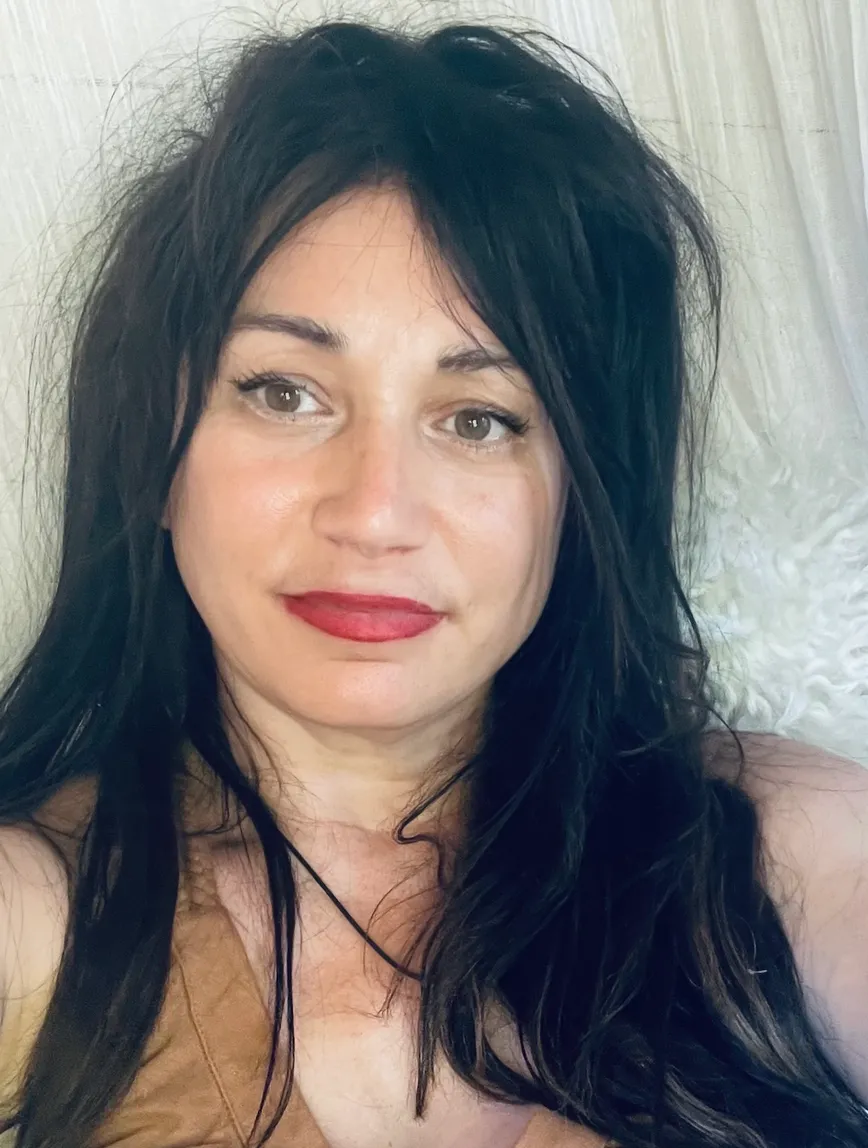
Before co-founding Red Fox Literary, LLC with Karen Grencik in 2011, Abigail Samoun was an in-house children’s book editor for over ten years. The books she edited received such honors as the CCBC Charlotte Zolotow award, the Ezra Jack Keats award, and the Pura Belpré Honor. As an agent, Abigail represents authors and illustrators working in a range of genres, from board books to young adult novels. Her clients include Hannah Harrison, Oliver Dominguez, Rachel Katstaller, Nicolo Carozzi, Betsy Franco, Carlyn Beccia, and Dan Krall. In addition to agenting, Abigail is the author of several children’s books, including Union Square Publishing’s Little Traveler board book series, What’s In Your Purse? (Chronicle), and Tarot for Baby (Rodale/Random House). Abi lives in lovely Sonoma, in the heart of the California, Wine Country, with her entomologist husband, two loud little boys, and one somewhat quieter rat terrier.
What was your path to becoming an agent?
I was an in-house children’s book editor for ten years and my favorite part of the job was always working with authors and illustrators directly—developing ideas, giving feedback, suggesting edits, but also developing relationships with them and getting to understand their creative process, forging that hard-to-define creative chemistry that requires mutual trust and respect. I also loved discovering new, unpublished talent.
One of the tough things about being an editor was that I’d work really intensely with an author or illustrator for a few months until the book shipped off to the printer and then we wouldn’t work together again until the next project. That was always a little sad for me. When the imprint I worked for shut down, I thought about all the things I’d really enjoyed about my work and it felt like agenting would allow me to continue doing a lot of it. Plus, I had this amazing list of un-agented authors and illustrators I’d worked with that I could approach about representation. Around that time, Karen Grencik, the first agent I’d ever bought a book from, reached out and asked me what I was thinking about doing next and when I told her “agenting,” she suggested a partnership. Nearly fifteen years later, with countless ALA awards, starred reviews, and book club picks under our belt, we’re still going strong. Now our little agency is comprised of six fabulous foxy agents and over two-hundred clients. I feel very lucky to be part of such a creative, mutually respectful, and experienced team. We launched our new website last year, had an open call to illustrators which resulted in adding some wonderful new artists to our list, and just sent out a beautiful Winter 2025 Look Book. Part of what keeps this work challenging and creative is that the industry and readers’ tastes are always changing so we have to stay responsive and keep evolving. I have a restless and creative personality so this suits me to a tee!
What about a manuscript moves you to want to represent the author/book?
That’s the perpetual question we’re always asking ourselves, isn't it? There’s always something a bit mysterious about that process. Over my 25 years in the children’s book world, I’ve learned to trust my gut more than my head. There’s certainly a place for questions like, “Can I sell this?” “Where would this project fit in today’s market?” “Who is the audience for this book?” And those are questions authors and illustrators definitely need to think about, but the catalyst for me is always that feeling of delight and emotional engagement with a story. After reading thousands upon thousands of manuscripts, I’m rarely surprised by plot direction or turns of phrase but when an author CAN surprise me, I sit up and pay attention. I realize I do the same thing watching movies or TV shows. Most of the time, you can tell where the story is going in the first five minutes. If it surprises you in a good way that’s a delightful experience. By “in a good way,” I think I mean that the author succeeds in framing what we know to be true in our hearts in a way that allows us to see it and experience it fresh, from a new perspective.
Three tips for authors on the journey to publication.
1) Find your inner literary family—the authors that you connect to deeply, the ones that made you want to start writing in the first place, the ones whose sentences take your breath away, the ones whose pages you stained with tears. Revisit them often and learn from them. Try to understand what it is about these particular authors that touched you. Think about what themes and subjects resonated with you. For me it was Margaret Atwood, Shirley Jackson, Vladimir Nabokov, Norman Mailer, Colette, Truman Capote, and T.S. Eliott. I taped their photos to my word processor as a college student and still re-read them when I need a reminder of what good writing can do, where it can take us.
2) Don’t rush the process.
It takes time to develop your craft and to understand what kinds of stories you want to offer the world. This formative time is really important. It takes a lot of inner work, understanding the themes and characters that live in you and are striving to come out. It also takes practice—lots and lots of practice and learning by doing. You have to learn to put your guts on the page but you also have to learn how to delicately sew those guts together (think Guillermo del Toro’s Frankenstein). It’s a messy process. I see too many authors and illustrators who rush to send out their work before really understanding who they are as storytellers and what the craft requires. Enjoy that formative time when your work is totally yours to refine and play with. There will be time for researching editors and publishers and agents. Authors know deep down when they're ready for that stage—for taking their work out into the world. That part has challenges all of its own, including the very scary bit about possible rejection, but you’ll have a far more resilience and a solid foundation if you know what you’re about as an artist and if you’ve developed your writing chops.
3) Find your niche in the marketplace.
Once you are ready to share your stories with the world, look around and see who is publishing and reading work that’s in the same family as yours. The lucky thing about publishing for children in the English language is that the marketplace is still fairly diverse. There are publishers who specialize in character education, others whose list is focused on the natural world, still others who do quirky books in unusual formats, some who do Catholic-themed books, some who do Jewish-themed books, small houses who focus on the arts, bigger ones who want books with broad commercial appeal. Study all the different markets for children’s books and find the publishers with the same sensibilities as yours. Even if your stories aren't broadly commercial, there may be a smaller or mid-sized publisher that would be just the right home for them.
What's on your manuscript wish list?
I always have a soft spot for stories with a gothic sensibility—something with lots of atmosphere, a little bit dark and spooky, with a setting you can lose yourself in. I’d also love to find a steamy YA romance about a pair of misfits—two kids who don’t really fit in anywhere and who work out their emotional baggage together. A YA thriller with a tough, savvy heroine would also really catch my eye. In middle-grade, I prefer stories about self-discovery, friendships, and family—Judy Blume, Lois Lowry, and Beverly Cleary were my favorite authors in my tween years and I think there’s still a place for stories that similarly explore those perennial themes with heart and humor (the Diary of a Wimpy Kid series is a more contemporary example that does this well). I also really enjoy contemporary fantasies with a dark side, like our Jed Alexander’s recent The Black Market and Tom Llewellyn’s The Bottle Imp of Bright House. As for picture books, my tastes are pretty eclectic. I like lyrical stories that capture your imagination and send you to strange worlds (think Fog Island by Tomi Ungerer, or Tea Party In the Woods by Akiko Miyakoshi), or quirky, humorous books like McFig and McFly by Henrik Drescher. I’m always on the look-out for picture books that are rhythmic, song-like, and fun to read out loud (like anything by Mem Fox). I’m also open to nonfiction that explores untold stories and intriguing bits of science and nature with lots of kid-appeal.
If you have a manuscript that matches Abigail’s wish list, you can query her at query [email protected] with the subject header 'SCBWI Newsletter Submission' for the month of February.